


Yesterday’s evening event was great for networking after a great first conference day. I had some great discussions during diner with the guys from x-cellent who also sponsored the conference and some other people I did not know before while ending the day with casual talk and some drinks in a round of my colleagues and some employee of Telekom I know for several years now. So I was looking forward for day 2.
Morning
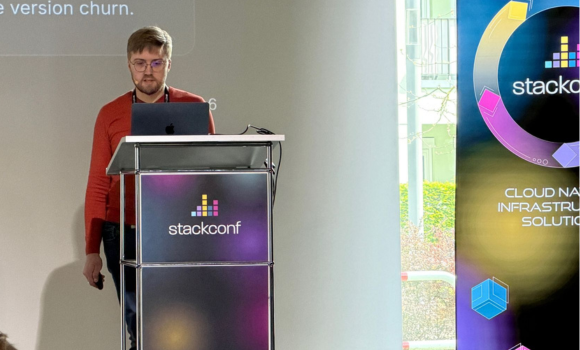
The morning started with Daniel Schock and End Release Anxiety: A Guide to Fully Automated Workflows with Semantic Release. A great talk starting with the reason many developers fear the release process. With simple mechanism like sticking with semantic versioning to reduce the anxiety and some tooling like Semantic Release and some GitHub actions to help further. He afterwards demoed his workflow while answering the questions of the audience.
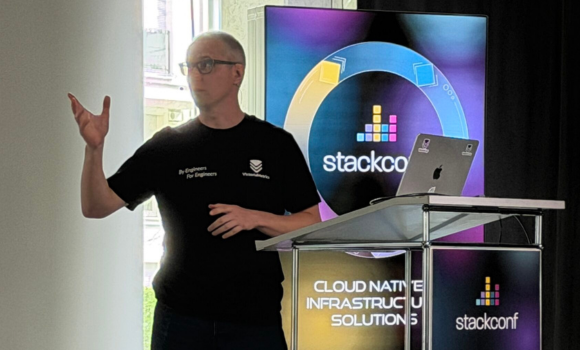
In his talk How to build an OSS Observability Stack with VictoriaMetrics and OpenTelemetry Dmytro Kozlov introduced VictoriaMetrics and the other components of the stack. He focused on benchmarking, the performance and the cost-efficiency coming from this afterwards. As I had seen this before his talk got more interesting for me when he started talking about OpenTelemetry and Grafana and how they play well with VictoriaMetrcs. In his demo he showed the OpenTelemetry demo Victoria metrics has forked and switched components to their stack so everyone can also verify it is working and performing as promised.
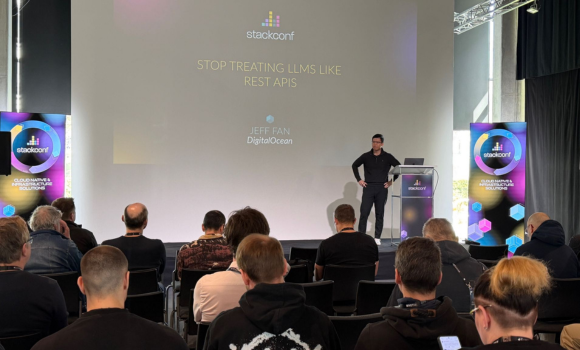
After a coffee refill Jeff Fan advised Stop Treating LLMs Like REST APIs. Because he finished his German B1 exam only some days ago he introduced himself in German, well done Jeff! Afterwards he switched back to English and his topic with some questions about AI adoption by the audience. From this he analyzed how success and with this scaling LLMs increases requirements and costs to show the reason is that it is still handled like the web traffic we are used to. To treat it more like the use case requires he introduced llm-d and in a quick demo he showed how even a simple workload can benefit. But the real benefits came of course with more complex scenarios. His bigger demo how easy it is to get llm-d up and running on Digitalocean Kubernetes Service he played as prerecorded and edited video, but if you want to try it yourself he contributed a guide to llm-d itself.
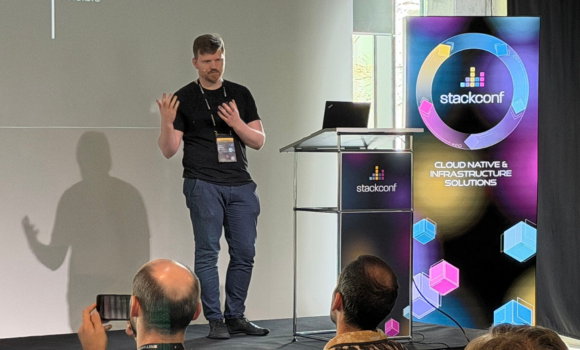
With Lucas Trilken I talked already yesterday about his talk and the environment he is working on. So I was excited for his talk The Magic of declarative Proxmox VE based Infrastructure. With Proxmox VE he of course targets a much more traditional infrastructure but with a GitOps approach for managing it in a very modern way. They utilize Ansible for this to do everything from day zero to day two operations. Unfortunately they are a bit behind schedule so the release of the Ansible code to the public did not happen in time for stackconf but is still planned for Q2 to have it on GitLab. In a demo he also showed the capabilities, just with the simple example of removing one user and creating another, but while this sounds not so impressive time was limited of course.
Ignites
Especially after lunch I like the ignites which are short talks about 5 minutes long with slides on autoplay. It is always a great chance to cover topics with a different focus of the overall conference.
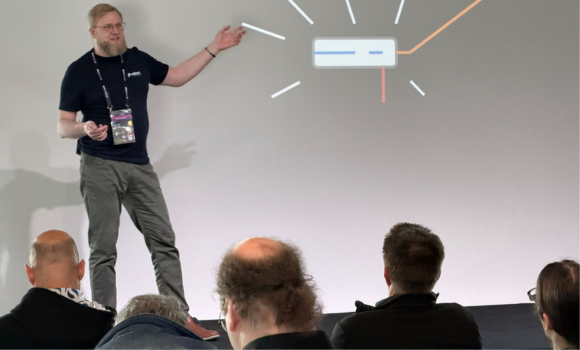
First ignite was Bare-Metal Provisioning with metal-stack.io by Botond Gal who introduced the topic to the audience. The solution provides a mini-lab for testing it at your laptop but is meant to orchestrate the workload on bare-metal systems in big data centers.
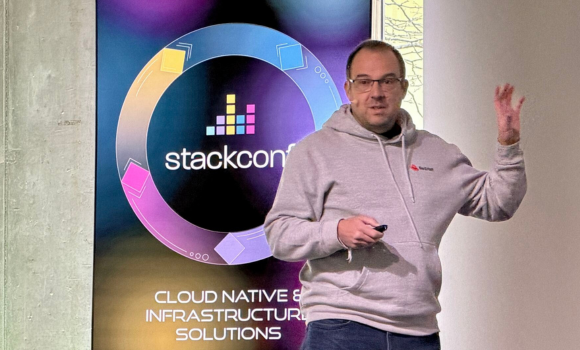
Next was Andreas Spanner with AIOps – Research, Test Harness & Product. Ultimate goal of AIOps is autonomous operation, and you can find all the research and testing in a repository hosted openly on GitHub.
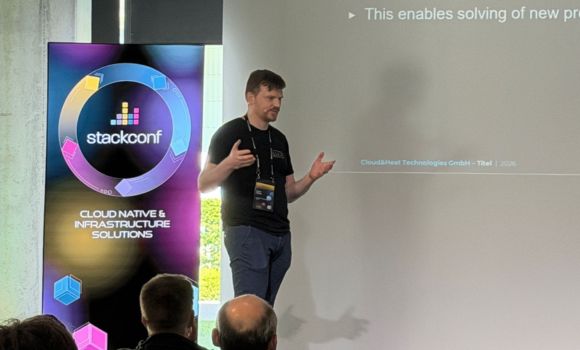
Lucas Trilken reminded about the Open Source Benefits. His talk started with the misunderstandings and definition of Open Source, followed by licences before he dived deeper. He covered benefits for all participating in the Open Source ecosystems which was hopefully a nice reminder to all.
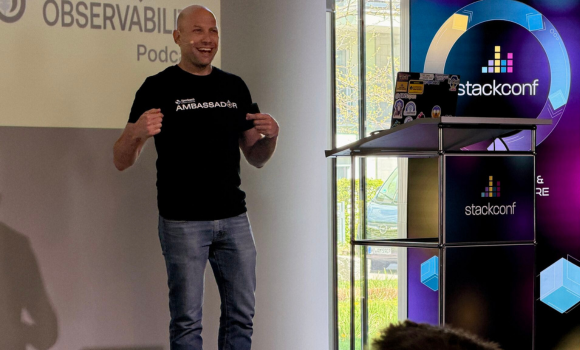
Last one was From Fork to Foundation: The OpenSearch Journey to the Linux Foundation by Dotan Horovits showing how OpenSearch was started as a fork in 2021 and evolved to what it is nowadays. Quite interesting to hear the story in much more detail from an insider than I had seen when following the process from the outside. Just one interesting fact from it for the enterprise users, you can now get LTS support by companies under the guidance of the Linux Foundation.
Afternoon
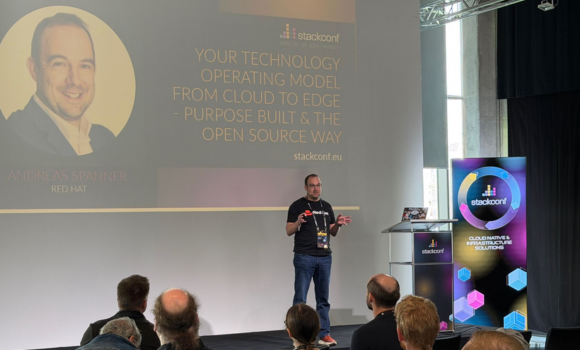
Back to the longer talks with Your Technology Operating Model from Cloud to Edge – Purpose Built & The Open Source Way by Andreas Spanner. He is one of the authors of the Book Technology Operating Models for Cloud and Edge he built this talk on. He had some great slides to explain misconceptions and other basic glossary to introduce the topic and make it understandable for all. Probably I have always worked in naturally grown Operating Model like he called it, so it was very interesting to hear his much more structured approach on planing. If you want to look into it without directly buying the book, you can look at the assets freely available. Another takeaway from his talk for me was the Open Practice Library with best practices for discovery, decision and delivery processes.
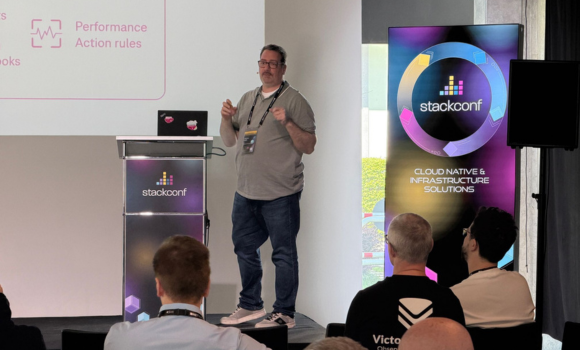
Christian Boelle talked about Serverless by Design: The Role of Functions in Europe’s Sovereign Cloud Future. Functions as a Service (FaaS) or Lambdas are an interesting concept many miss in European clouds, but Christian showed that this is a misunderstanding as they are already available and not much behind what you can get from the big American companies. He also provided some best practices to follow and pitfalls to avoid. He also gave some insides on how important is FaaS from a Cloud providers perspective based on the growing market share and revenue. Before running a prerecorded demo to remove waiting time to a minimum. If you want to look into this yourself he pointed to the study State of the art of Serverless – Q1 2026.
Open Spaces
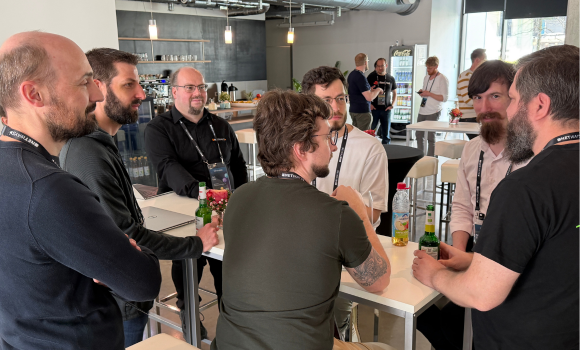
Open Spaces are spontaneous organized sessions by the attendees. Same are really into these type of sessions, some dislike them, I am somewhere in between. But yesterday I already enjoyed a good one where we discussed bootc. So I was looking forward to it today and what would be pitched this time. New suggestions for today were Functiongraphs to add to the topics from the last talk and one on code from non-tech people which I joined.
Conclusion
I really enjoyed stackconf 2026. Compared to OSMC it is much smaller and less focused so it may not everyones choice, but I really liked this format, too. So thanks to all the speakers and attendees who made it so enjoyable! Of course also thanks to the sponsors and my colleagues who made the conference possible for all us to enjoy. Safe travels home to every attendee, I hope to meet you at another conference in future!

0 Kommentare