


From Hype to Reality
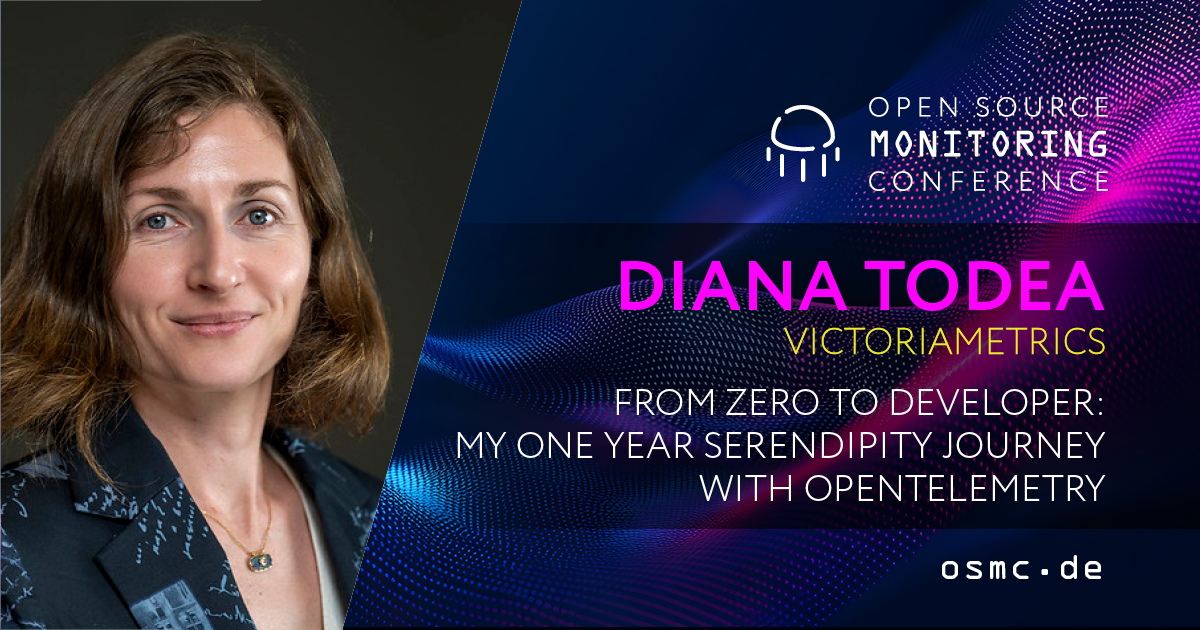
How many of you actually have OpenTelemetry in production right now? When Diana Todea asked this during her session at OSMC 2025, the lack of hands in the room proved her point. There is still a huge gap between the popularity of a project and its actual implementation. As a Developer Experience Engineer, Diana didn’t just talk about the tech. She shared her „serendipity journey“ that led her from building the first OTel exams to founding the Romanian localization group.
The Hidden Costs of OTel
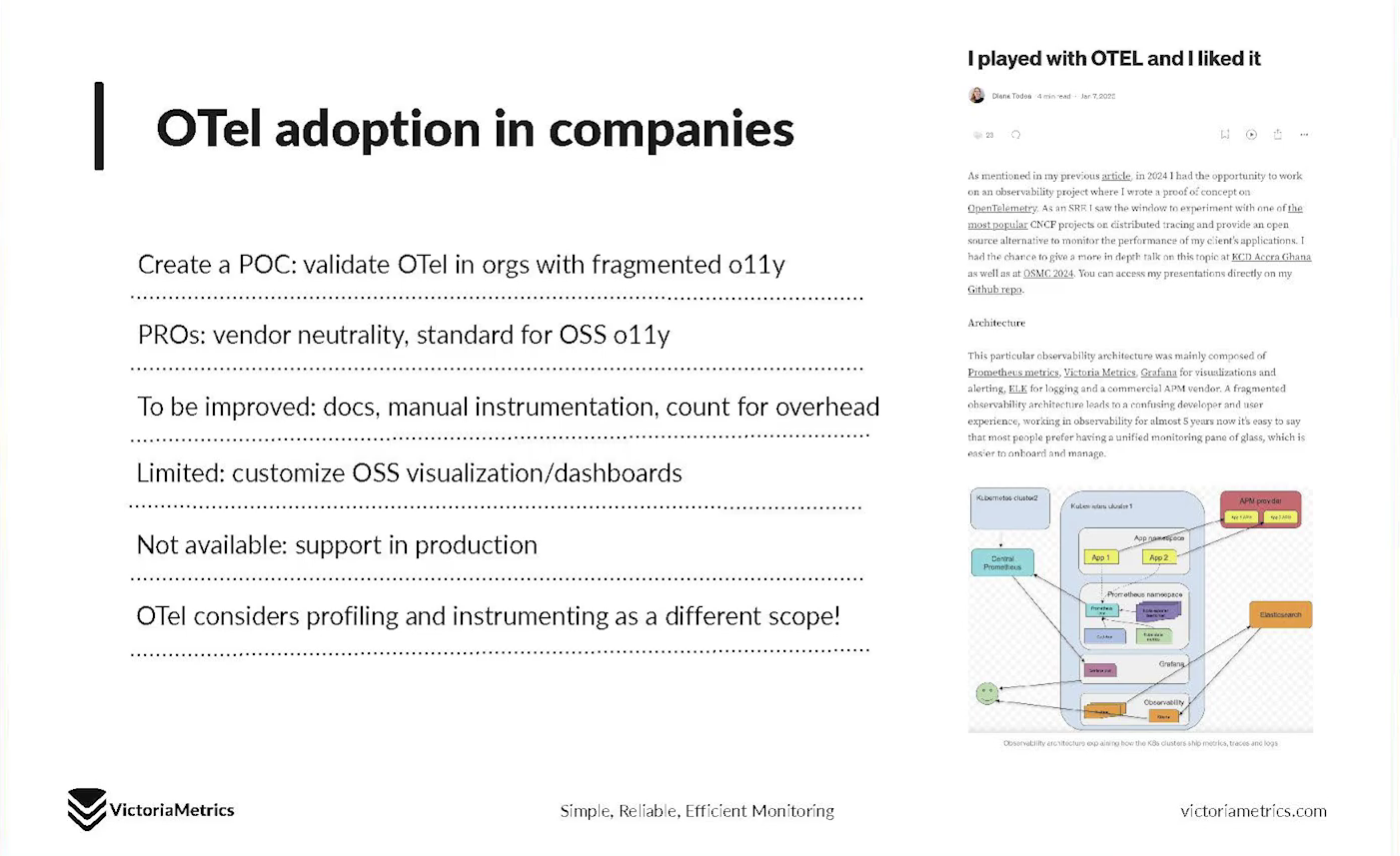
In her talk, Diana walked us through her transition from an observability specialist to a contributor. She focused on a very realistic view of the project, highlighting that while the ecosystem is rich, the path from zero to final stages is often blocked by complexity and a lack of dedicated engineering power. She was very clear about the hidden costs. Many companies are hearing about OTel, but they don’t realize that implementing it is a long-term project. It is not a two-week Proof of concept. Her experience showed that you must account for performance overhead because application degradation can happen right from the start. You also need parallel jobs in staging and production to understand how workloads react.
Motivation Beyond the Code
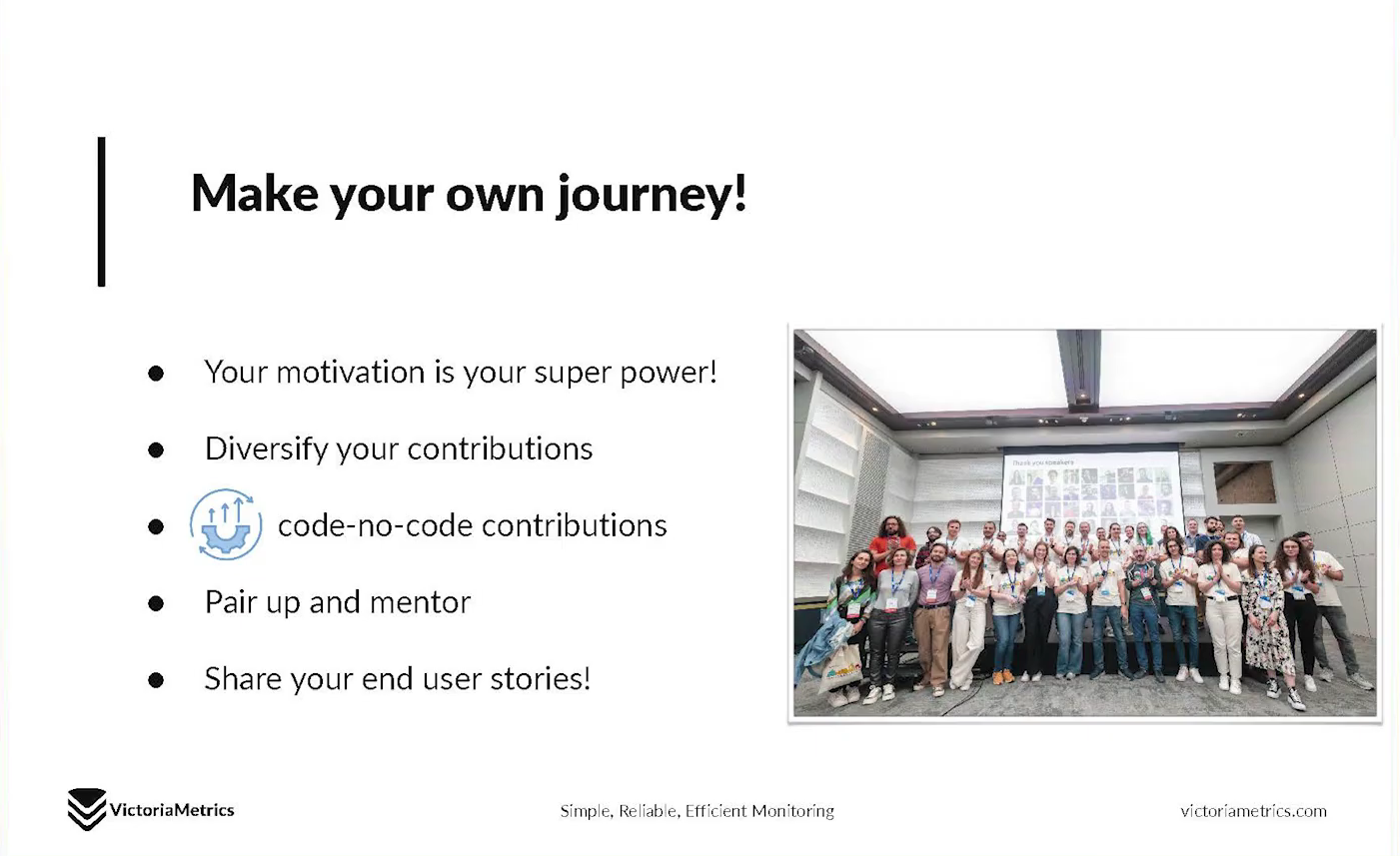
Another major hurdle is the documentation. The current docs are often academic and cumbersome, which leads to a difficult onboarding process for developers. What do you do if your company doesn’t have a use case or the resources for a full OTel migration? Diana pivoted to becoming an individual contributor. She emphasized that contribution is not just about code. You can contribute through opening issues based on developer feedback, improving documentation, or focusing on localization. She noticed a gap in the community. While Spanish and Chinese are very active, there was no German localization.
Community Impact and New Tools
Being Romanian, Diana took it upon herself to create the Special Interest Group for Romanian localization. This move brought in fresh blood like software engineers who were excited to start their journey with non-code contributions. She shared a story about a person from Austria who was motivated to start contributing to ArgoCD after hearing her talk. It is a reminder that sharing these journeys helps other developers overcome their own blocks. Diana also highlighted two new projects aimed at making OTel less cumbersome. OpenTelemetryWeaver focuses on observability by design to make onboarding easier, while OpenTelemetryInjector focuses on setting resource attributes automatically at startup.
Final Takeaway: OTel Needs Your Stories
The biggest lesson from Diana is that every journey is different, but they all require a deep personal motivation. Whether you are curious or your boss asked you to do it, you have to be clear about your why or you will get lost. She also showcased how VictoriaMetrics supports the OTLP (OpenTelemetry Protocol) format for metrics and logs. The OTel community needs more end-user stories. It doesn’t matter if it is production or just playing around because developer feedback is the only way to make the project better. As Diana put it, OTel is here to stay, but it needs time and patience to mature.




0 Kommentare