

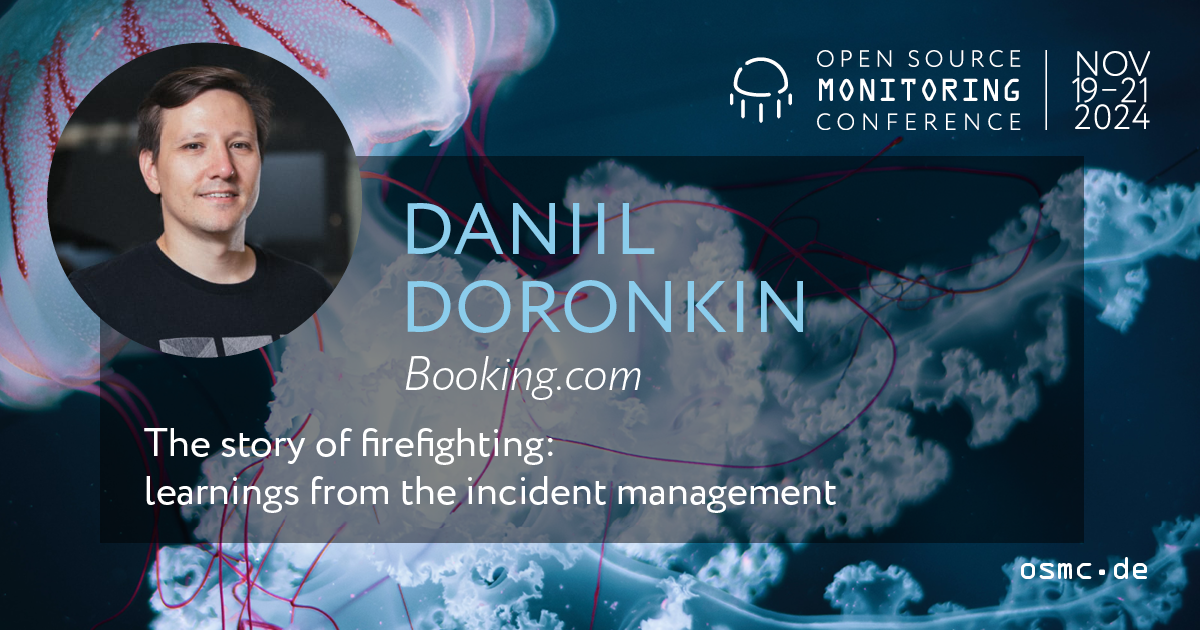
The structured, high-stakes world of firefighting intrigued me the moment I saw Daniil Doronkin’s talk in the OSMC 2024 program. As someone who’s been involved in incident management on-call rotations and postmortem reviews, I was curious how the world of emergency response could inform how we handle IT incidents. Doronkin’s talk offered more than just an interesting metaphor – it provided a practical framework that I’ve since reflected on deeply.
Introducing the Speaker and the Topic
At OSMC 2024, Daniil Doronkin presented his talk, drawing a fascinating comparison between professional firefighting and incident response in the tech world. He connected the structured chaos of firefighting operations to the often similarly stressful environments we face during system outages, showing how many of the same principles apply.
From Fire Response to Incident Response
Doronkin explained how core concepts from firefighting translate well into IT:
- Preparedness: Just like fire crews drill for emergencies, tech teams need structured preparation. He emphasized the importance of clear protocols, rehearsed runbooks, and the right tooling.
- On-scene leadership: In emergencies – whether real fires or metaphorical ones – communication and decisive leadership are essential. Having a designated incident commander and clearly defined roles can prevent confusion when every second counts.
- Post-incident analysis: After the fire is out or the system is stable again, reflection is key. Fire departments hold debriefings, and so should we – through blameless postmortems and actionable follow-ups.
“What can IT learn from failure?”
One of the key takeaways from Daniil’s talk was that failure isn’t something to hide – it’s something to learn from. He highlighted the value of:
- Postmortems: Honest, detailed incident reports that focus on causes, not blame.
- Transparency: Encouraging open dialogue about mistakes helps build trust and a culture of improvement.
- Iterative improvement: Incident response shouldn’t be a fixed playbook – it should evolve as teams gain new insights.
AI’s Role in Modern Incident Management
Another exciting dimension of the talk was how artificial intelligence is already transforming how we respond to incidents:
- Anomaly detection: Machine learning models can surface irregular system behaviors early – sometimes before humans even notice them.
- Automation: Some routine mitigation steps can be handled autonomously, speeding up time-to-resolution.
- Predictive insights: Perhaps most futuristic of all, Daniil discussed how AI may eventually predict incidents before they occur, using pattern recognition and system telemetry.
Personal Takeaways as a Trainee
What stood out most to me was the discipline and calm that professional firefighters bring to high-pressure situations. Seeing that mindset translated into the world of IT made me realize how much more structure and reflection we could bring into our incident processes. As someone early in their career, I found it encouraging to think of incident response not as a chaotic scramble, but as a craft that can be honed over time.
The Bigger Picture: Systems Thinking and Resilience
Ultimately, Daniil’s talk reminded me that being prepared isn’t just about tools – it’s about people, practice, and mindset. Building resilient systems means building resilient teams. His comparison showed how a mature, coordinated response process can make the difference between a small flare-up and a full-on blaze.
OSMC 2025 – Stay Tuned
Save the date for the next OSMC taking place from November 18 – 20, 2025, in Nuremberg, Germany. The conference continues to be a rich space for learning, reflection, and inspiration across the open source monitoring community.




0 Kommentare