


I arrived at the bright Studio Balan in the north of Munich early, greeted by a line of coffee mugs and a warm Welcome from the organizers. Before the talks started we had a casual ice‑breaker – a quick game to get in touch with the other conferee.
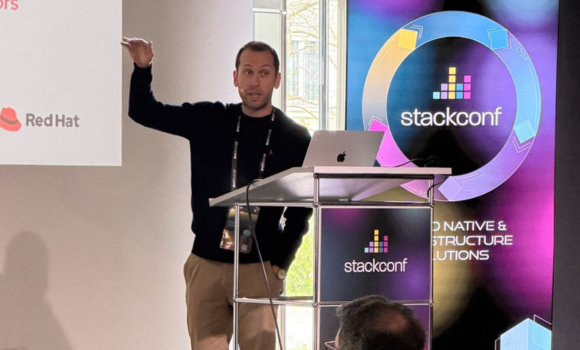
The first session kicked off with Antonio Cardace’s deep dive into Combining Kubernetes and VLLM to Deliver Scalable, Distributed Inference with llm‑d. Antonio explained why classic load‑balancing isn’t enough for large language model (LLM) workloads that keep state across many requests. He showed how llm‑d, a distributed inference serving stack, splits inference into a “prefill” and a “decode” phase, and uses KV‑cache‑aware routing to keep GPUs busy.
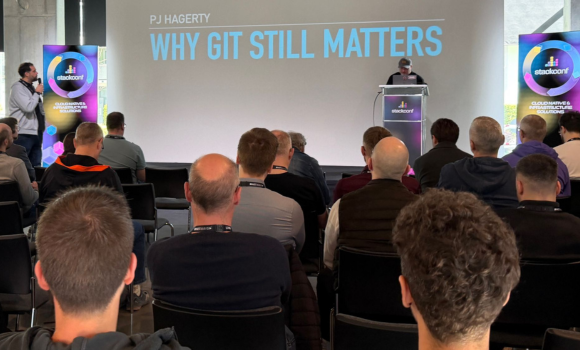
Next up, PJ Hagerty reminded us why Git still matters in a world full of “vibe‑coding” tools. He walked us through the evolution of Git, and remembered us that Git is still one of the powerful tools we have. From IaaS e.g. Ansible to modern GitOps with ArgoCD, CI/CD pipelines or to track changes for compliance, git is still one of the powerful tools we use every day.
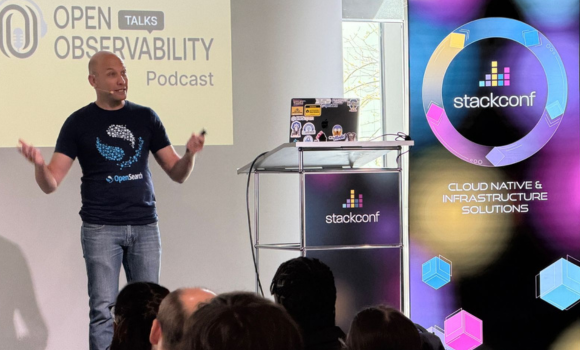
After a short coffee break Dotan Horovits took the stage for OpenSearch: The Open Source Path to Search and Observability He gave a quick tour of the platform – from log indexing and real‑time analytics to the new vector‑search and AI/ML connectors. The most exciting part for me was the recent addition of a Prometheus data source with full PromQL support and a trace agent that lets OpenSearch become a one‑stop shop for metrics, logs, and distributed tracing.
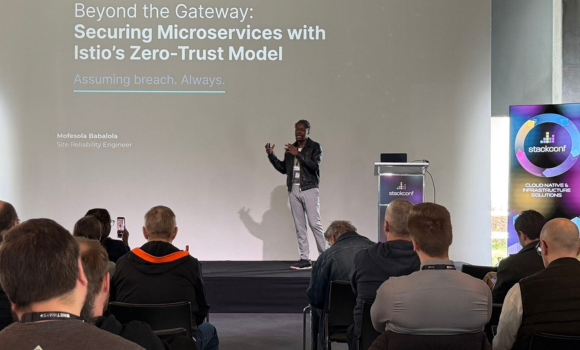
Mofesola Babalola then shifted the focus inward, showing how to protect micro‑services with Istio’s zero‑trust model. He explained that the biggest security gap is east‑west traffic inside the cluster and demonstrated how Istio uses mTLS, Spiffe and JWT tokens to lock down an internal attacker without touching application code. He started a journey with us which can lead us to more velocity, security, observability and reliability for our microservices.
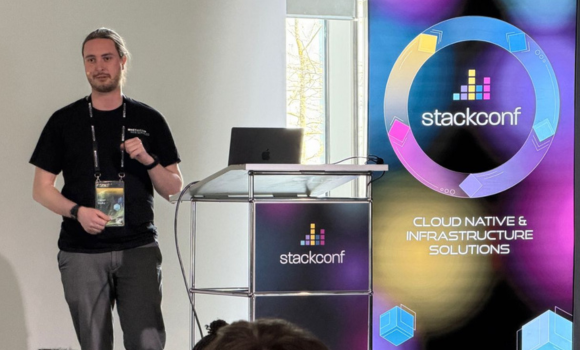
The final talk of the morning was a hands‑on look at real‑time threat detection with Falco by Daniel Bodky. He walked us through Falco’s rule engine that watches syscalls, showed a live demo of Falco feeding alerts into Grafana/Loki, and even triggered an automatic response with Talon. The comparison with Tetragon helped me understand where Falco shines (simplicity, mature rule set) and where it may need a complement.
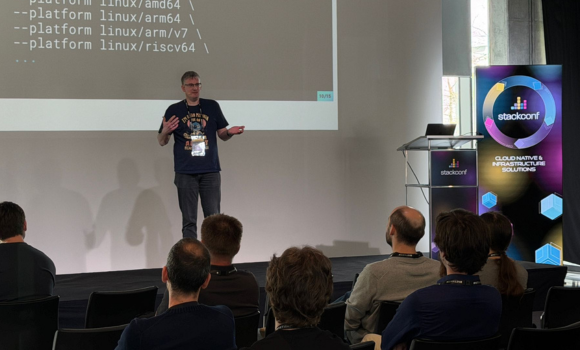
After the lunch we regrouped in the main hall for the round of lightning talks. The first talk was delivered by Tom Wieczorek, who showed us a glimpse of Kubernetes on RISC‑V. Tom gave us a short introduction to k0s and a basic idea what is needed to run Kubernetes on RISC-V hardware. Many basic tools are available but a lot of the glue work still has to be done by the community, which would say by YOU! Start to contribute now!
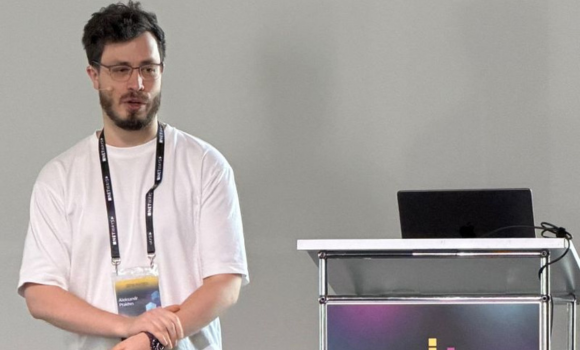
Alexander Ptakhin took the stage for his lightning talk titled Pipeline ETA: 3… 2… Tomorrow?. Alexander’s message was all about context and speed. He urged us to keep pipelines simple, to use a language we already love, e.g Makefiles for the core logic and YAML for the GitLab CI definition.
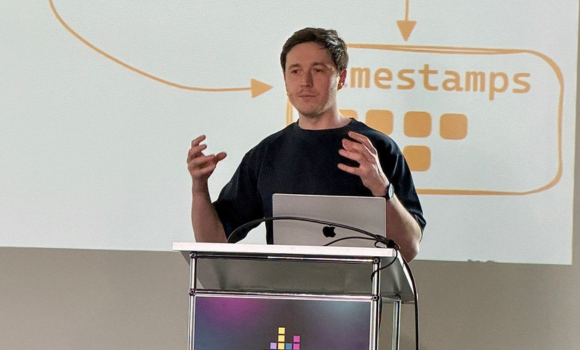
After the lightning talks the room settled into the first full‑length session of the afternoon: Aggregating Metrics In‑Flight presented by Roman Khavronenko. He introduced a newer approach: stream aggregation with vmagent, which can aggregate metrics before they are stored, dramatically reducing the number of series that ever hit the TSDB.
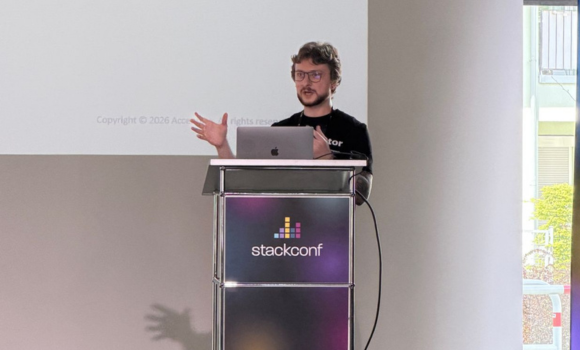
From the world of observability we moved to a more human‑centred perspective with Oleg Konstantinov’s talk Focus on People in the AI Era. Oleg opened with a provocative line: while most people fear AI will steal their jobs, he worries it will create more work for us because every shiny automation still needs a messy, emotional, confused human to explain what they actually want.
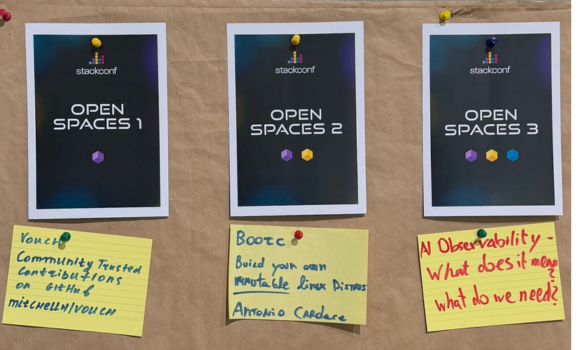
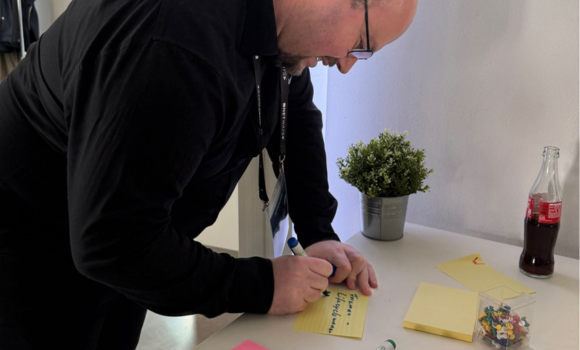
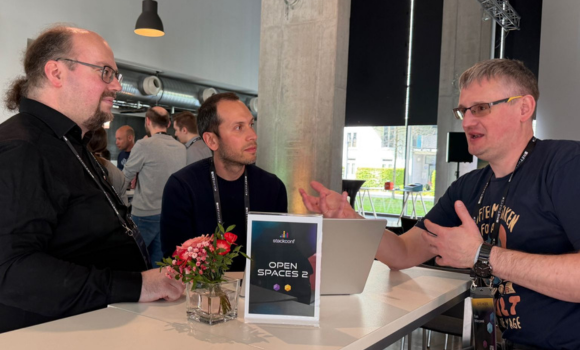
Before the last talk, our Open Spaces were in full swing. Topics were all about Foreman Lifecycle Management for systems, Bootc Build your own immutable linux distros, and AI Observability – what does it mean? What do we need?
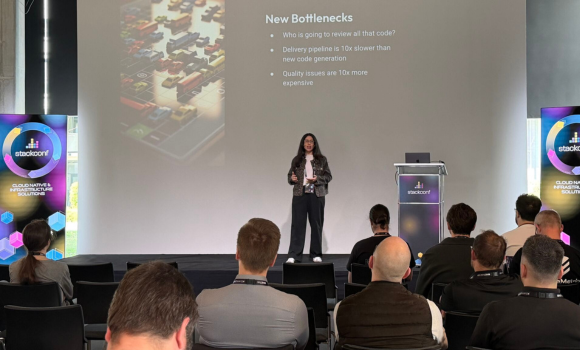
The final talk of the day was delivered by Avishag Sahar, titled Your AI Code Reviews Are Missing the Point (and How to Fix It). She figured out that the code review is often a bottleneck in the software development life cycle and good starting point to introduce AI Agents to provide fast feedback loops.
After a series of exciting talks, the evening wound down with cocktails and wine. All in all, it was a successful, interesting, and wonderful first day at stackconf in Munich.



0 Kommentare