


Hello I’m Leander and I’m a Consultant at NETWAYS Professional Service. This is my first time at stackconf, and I’m super excited to share some insights from my experience at stackconf 2025. I was especially looking forward to Day 2 after such a great first day and was hoping to learn just as much. Coming up next are my personal highlights from Day 2.
The Morning
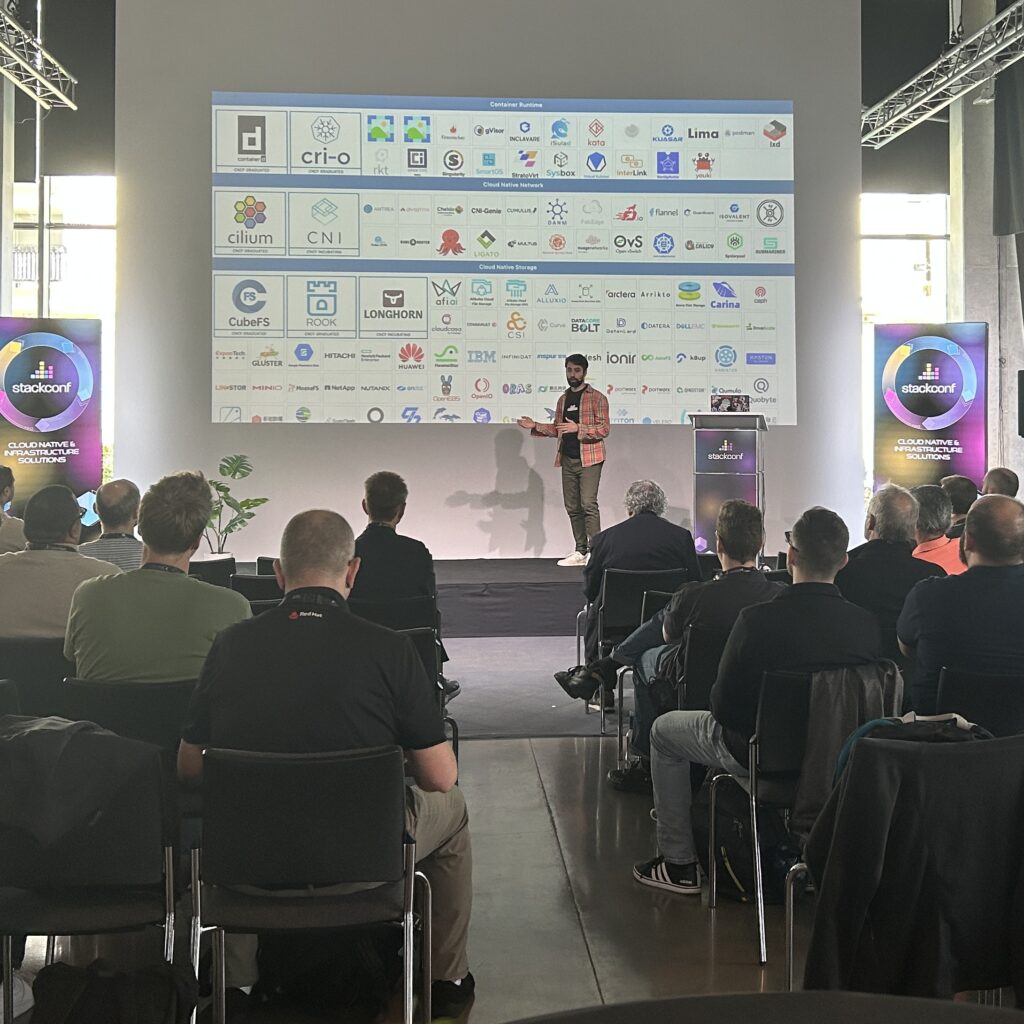
After a small breakfast at the event, it was time for the first talk: “2025: I Don’t Know K8S and at This Point, I’m Too Afraid To Ask” by Alexandru Dejanu. I was quite excited for this one, as my main reason for attending stackconf this year is to begin my journey into cloud-native infrastructure. Starting with Kubernetes today can feel intimidating—many people already seem very experienced with it, and it can be scary to ask about the basics.
Alexandru walked us through the fundamentals of K8s and made it approachable. My key takeaways were that the CNCF landscape map is a great resource for exploring open-source Kubernetes tools, and that you should start thinking of Kubernetes as just a very nice API—it’s not as complex as it might seem. I really enjoyed the talk because I could relate so much to the topic, being a Kubernetes beginner myself.
Next up was “Evolving Shift Left: Integrating Observability into Modern Software Development” by Martin McLarnon. „Shift Left“ is a practice in software development that aims to catch issues early and avoid pushing broken software to production. As a long-time software developer, Martin shared his experience and perspective on how to approach this mindset. His talk focused on two key concepts in modern development: continuous improvement and problem-solving. To support these ideas, he recommended using OpenTelemetry, which has become the de facto standard in observability. It helps instrument your applications to produce metrics, logs, and traces—making it easier to understand what’s happening and catch issues early. Coming from a monitoring background myself, I agree that OpenTelemetry is becoming the go-to standard in observability and is definitely worth learning. In conclusion, by embracing continuous improvement and problem-solving, you deliver greater value to your customers and are more likely to succeed as a business.
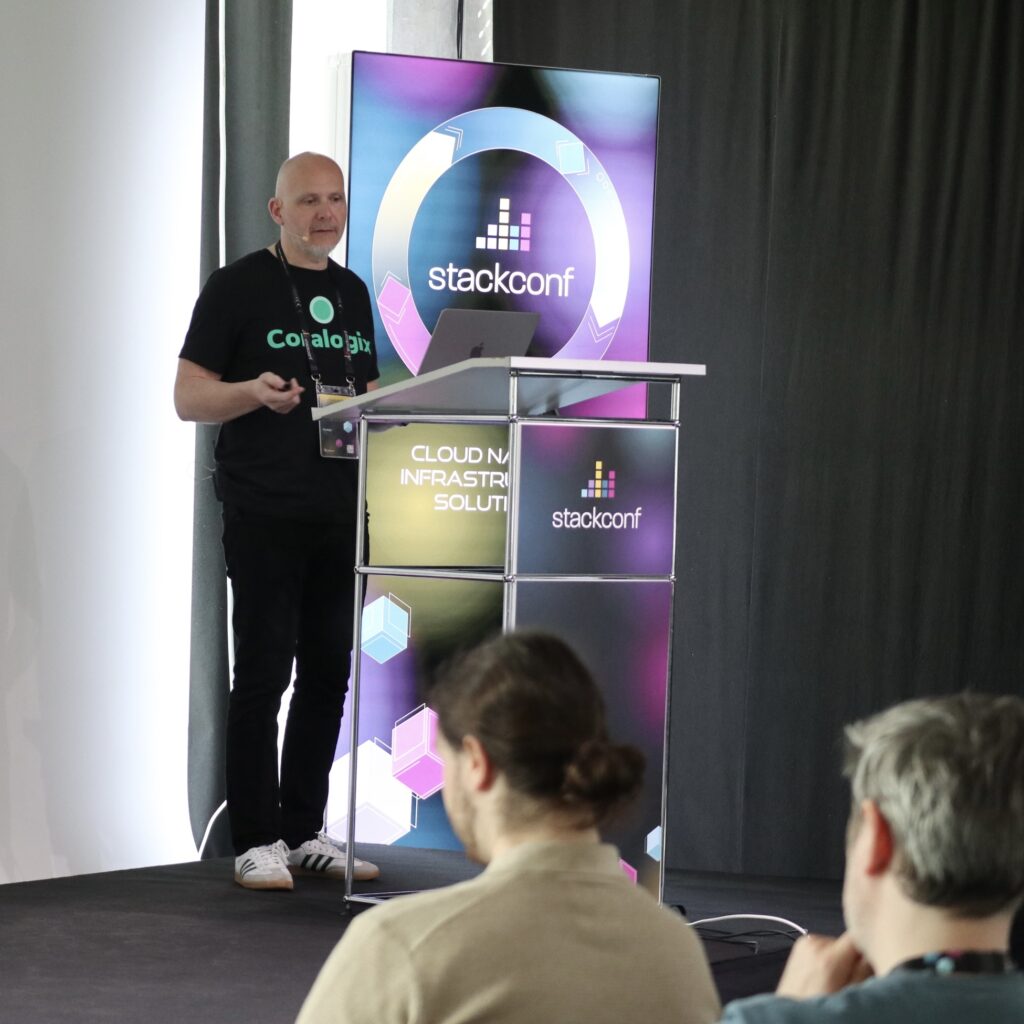
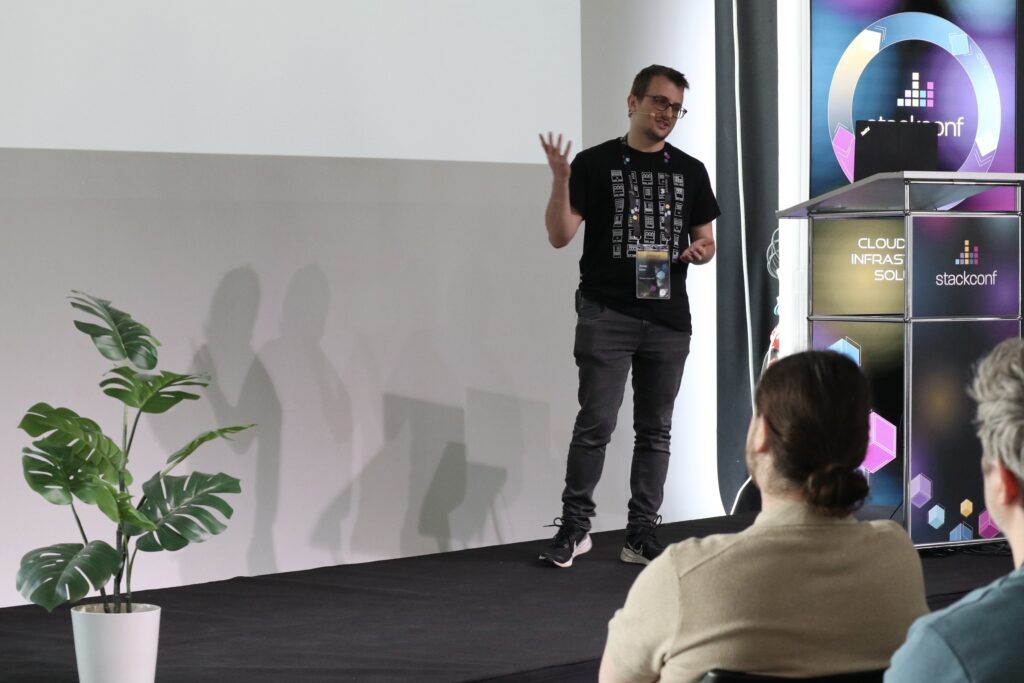
The last talk I want to highlight from the morning was “Building a Hyperconverged Proxmox VE Cluster with Ceph” by Jonas Sterr. Jonas gave a quick introduction to Proxmox VE with Ceph. The talk was more tailored toward system administrators interested in using or exploring Proxmox in combination with Ceph. Obviously, a complete workshop wouldn’t fit into 30 minutes, so he gave us an overview of both tools and covered their core concepts. He also shared common pitfalls you might encounter when setting up Proxmox with Ceph, helping the audience have a smoother experience if they try it themselves.
The Afternoon
After the lunch break, as at most conferences, the ignite talks began. This time, we had three ignite sessions, each interesting in its own way.
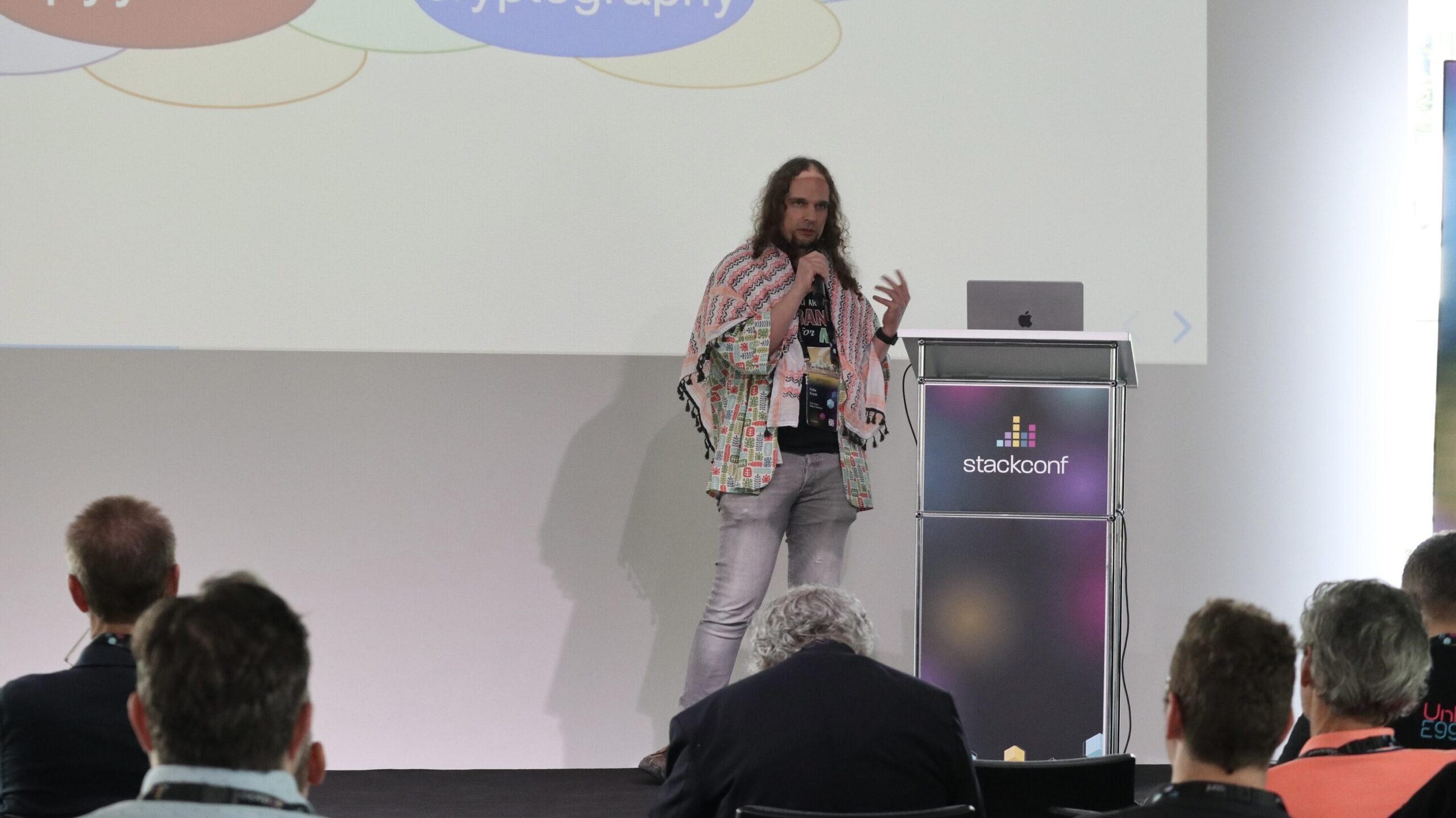
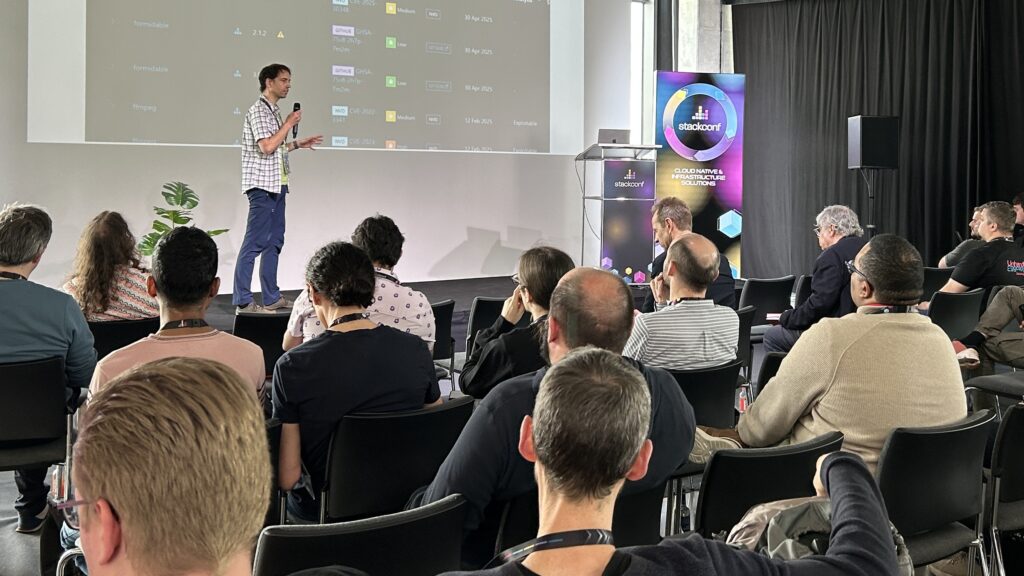
First, Felix Frank shared some helpful tools and tips for working with Python from his daily work. He uses Python a lot because it’s installed on almost every server and is easy to understand. One key topic he covered was Python virtual environments (venvs), which allow you to manage dependencies per project or directory. They’re a great way to avoid compatibility issues—I use them often with Ansible to test different Ansible versions. Next was a follow-up from Miloš Sutanovac, continuing his Day 1 talk about the local-first approach. Out of nowhere, a new website dropped that helps you navigate the growing ecosystem of local-first tools and make informed choices. Go check it out if you’re interested: https://www.localfirst.fm/landscape. Lastly, Philipp A. Baer talked about how his company handles SBOM (Software Bill of Materials) and the tools they use. Personally, I haven’t had much exposure to SBOMs before, so I was surprised to learn about their importance. They mainly use Dependency Track to manage this process.
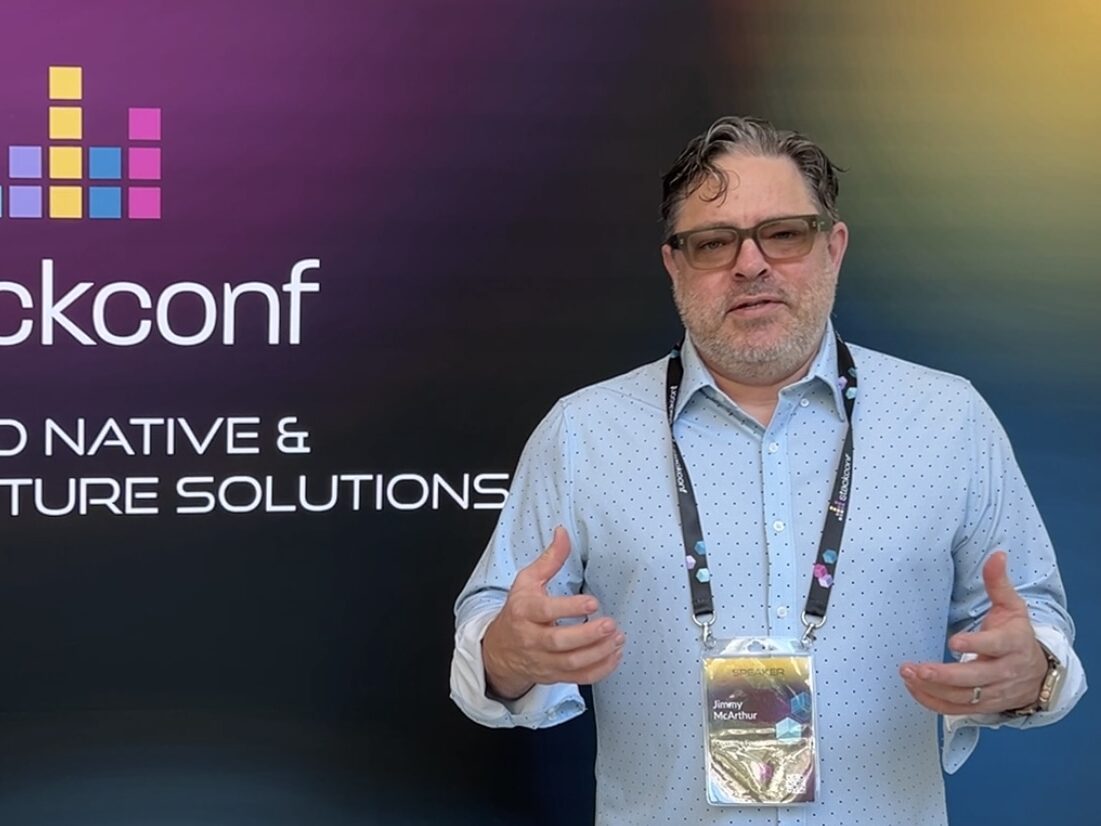
Up next, I want to highlight the talk “How Open Source Communities are Defining the Next Generation of Infrastructure” by Jimmy McArthur, who works for the OpenInfra Foundation. As NETWAYS is a member of the OpenInfra Foundation, we were especially excited about this talk because we really appreciate the work they do. The foundation operates similarly to the Linux Foundation and supports open-source projects that help build modern IT infrastructure. One of their major projects is OpenStack, which we also use for our cloud offering. Jimmy walked us through some of the foundation’s projects and emphasized their importance in the infrastructure landscape.
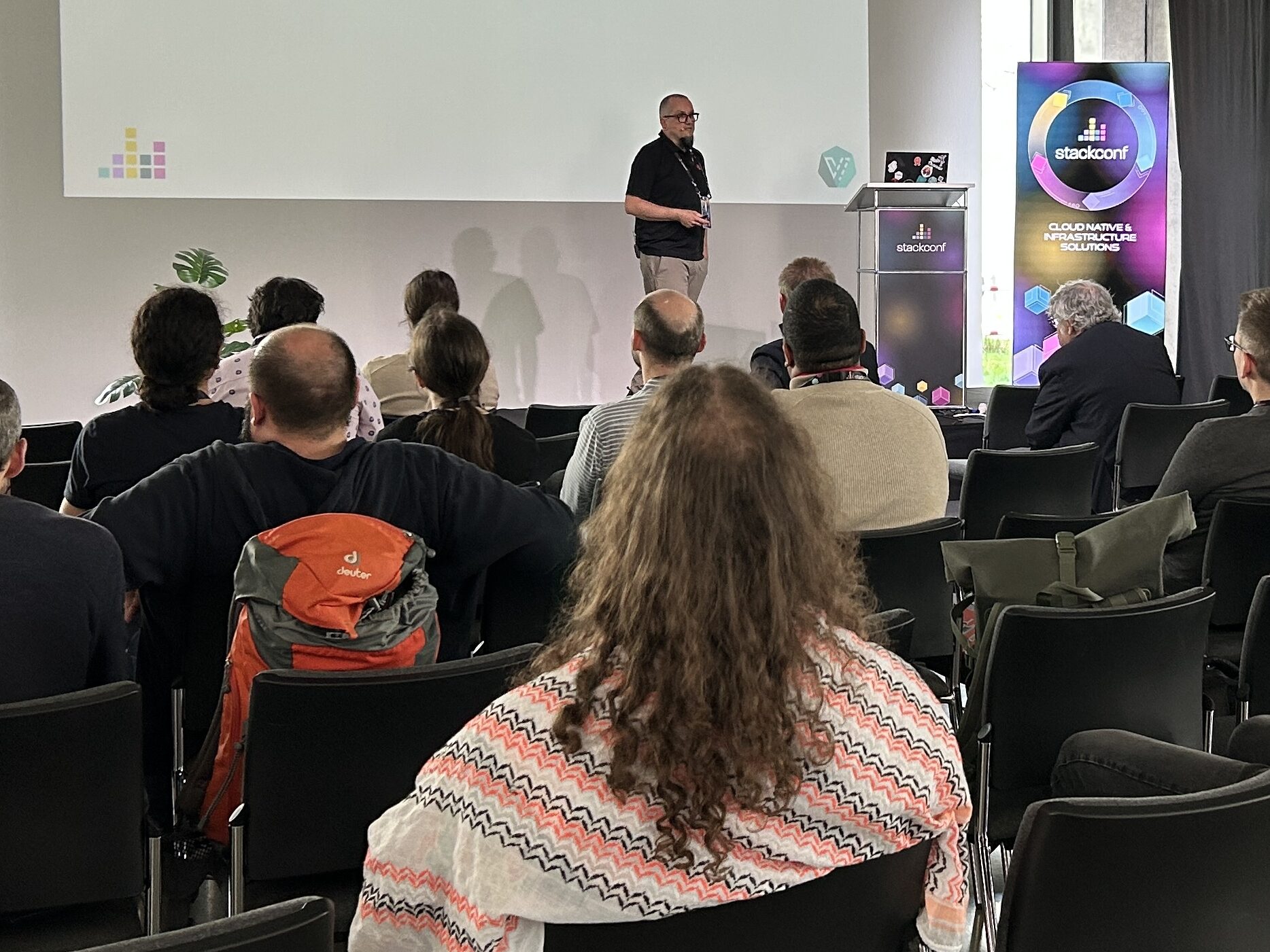
Lastly, I want to highlight “Zap the Flakes! Leveraging AI to Combat Flaky Tests with CANNIER” by Daniel Hiller. The talk focused on flaky tests—those that sometimes pass and sometimes fail without a clear reason—which can be a major pain in software development. These are especially common in end-to-end testing and can slow down CI systems or erode developer trust. Daniel presented the CANNIER approach, which uses AI to predict which tests are likely to be flaky before they even run in CI. This involves analyzing test code and training a model to detect patterns linked to flakiness. By identifying flaky tests early, he and his team can save time, reduce frustration, and improve the reliability of their testing pipelines.
Open Spaces
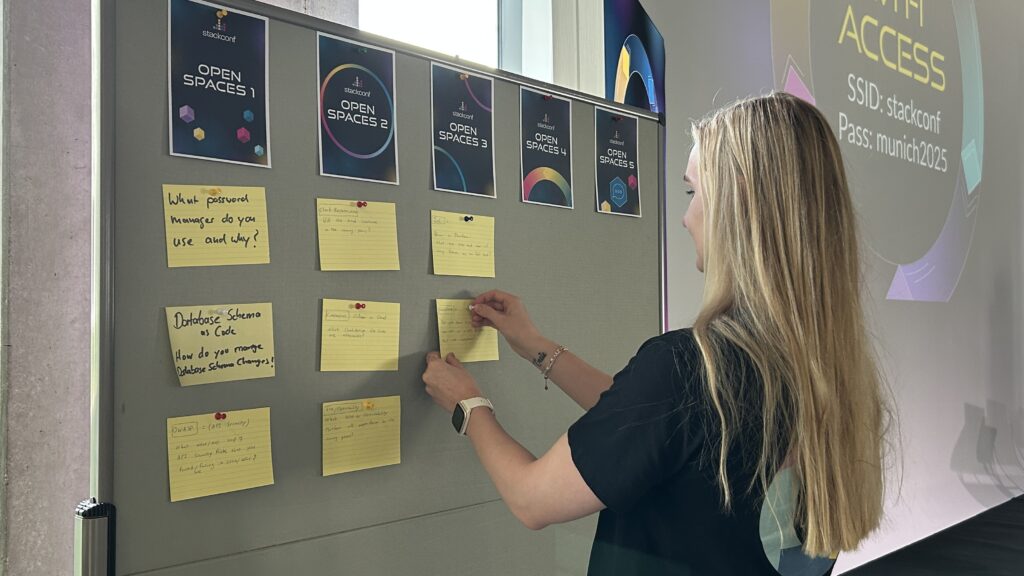
Afterwards, the Open Spaces were full of exciting discussions. People talked about password managers, database schema as code, observability, Kubernetes, and many other topics. It was great to share ideas, ask questions, and learn from each other in a relaxed setting.
Conclusion
I’m super happy that I went to stackconf—so many interesting talks and conversations! I discovered a bunch of tools and gathered knowledge that I want to try out myself. I hope I was able to give you some insights into the event, and we hope to see you at one of our events in the future.




0 Kommentare