


After yesterday’s workshops and welcome dinner the conference started with the typical welcome by our Bernd introducing the many new attendees to the event and remembering those recurring perhaps now for the 18th time of important things like wearing the batch and the evening event. The welcome included also a short introduction by Jochen from Search Guard as our gold sponsor.
The Morning
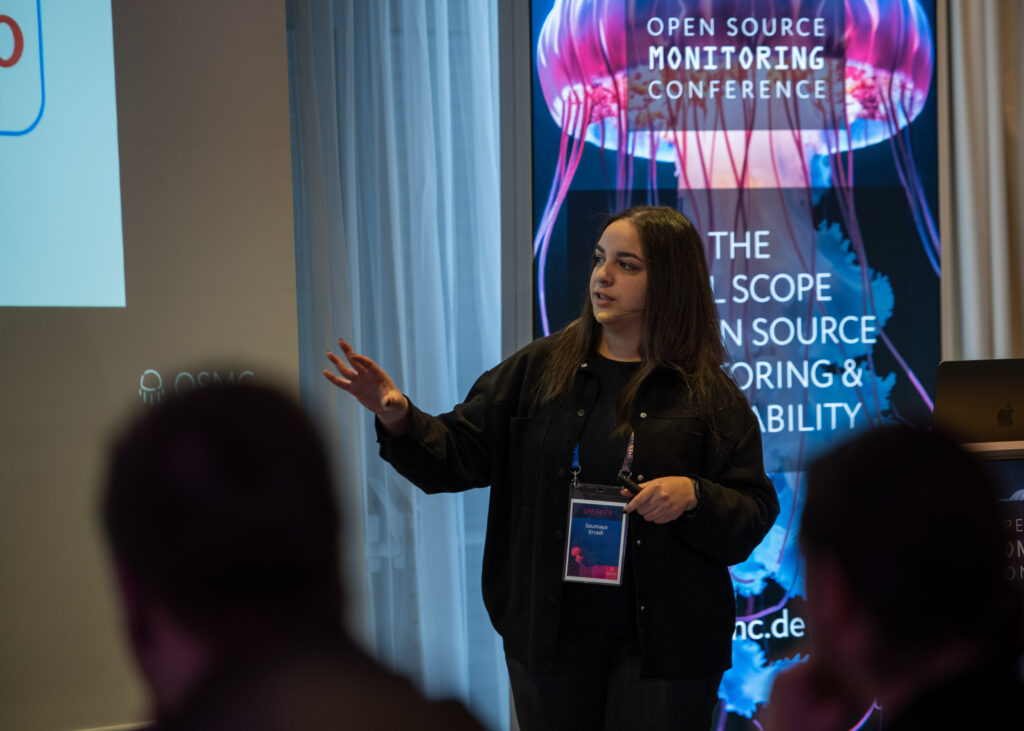
After the welcome I joined the first talk „Cypress, Playwright or Selenium: choosing the right testing tool“ by Soumaya Erradi as Playwright is a tool we worked with in a proof of concept for an Icinga Web 2 module for End2End monitoring and so I wanted to hear about practical experience. Soumaya introduced the topic by telling the audience here way into End2End testing as a developer before going into depth for Selenium.
As Selenium was the first and for a long time only solution it has it advantages in the language and browser support, and the large community. But it is so big it tends to be slow, flaky and complex. With a very simple web calculator she demoed Selenium in action and explained the required code in detail.
Cypress was developed as an alternative by a developer not happy with Selenium to better fit his needs. He was successfully as Soumaya mentions the developer experience as an advantage, disadvantages are the need for plugins, limited browser support and it is limited to JavaScript only. She used the same application in her demo so you could easily see the differences between both solutions including a very convincing UI.
Playwright is the newest tool but growing strong with good language and browser support, headless mode and mobile support. The disadvantages mentioned are the complex API, the syntax not being too intuitive and the still small community. Again in the demo she nicely showed the differences and specialities.
Hearing Soumaya’s conclusion I see a clear winner in Playwright, what makes me happy we have chosen it for our project and I hope we will find time in the near future to push it forward. If you want to look into her demos yourself and do your own comparison she was so nice hosting it at GitHub.
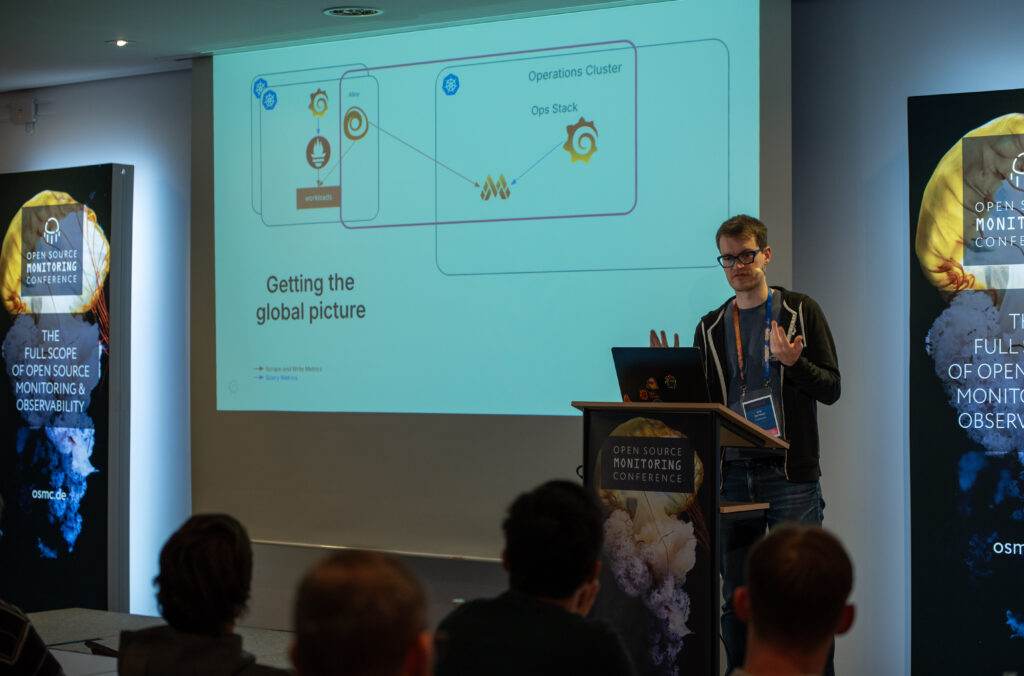
Second talk for me was by Erik Sommer from Grafana Labs titled „Paranoid Observability – Success Stories and Misfortunes observing an observability stack“. I really like the „Eat your own dog food“ mentality he showed when explaining how they use their own tools to monitor their hosted instances of the same tools.
Getting the insights on where they use which component and why was great. Especially hearing about the paranoid part adding additional instances to observe the operations cluster and even having a backup for those.
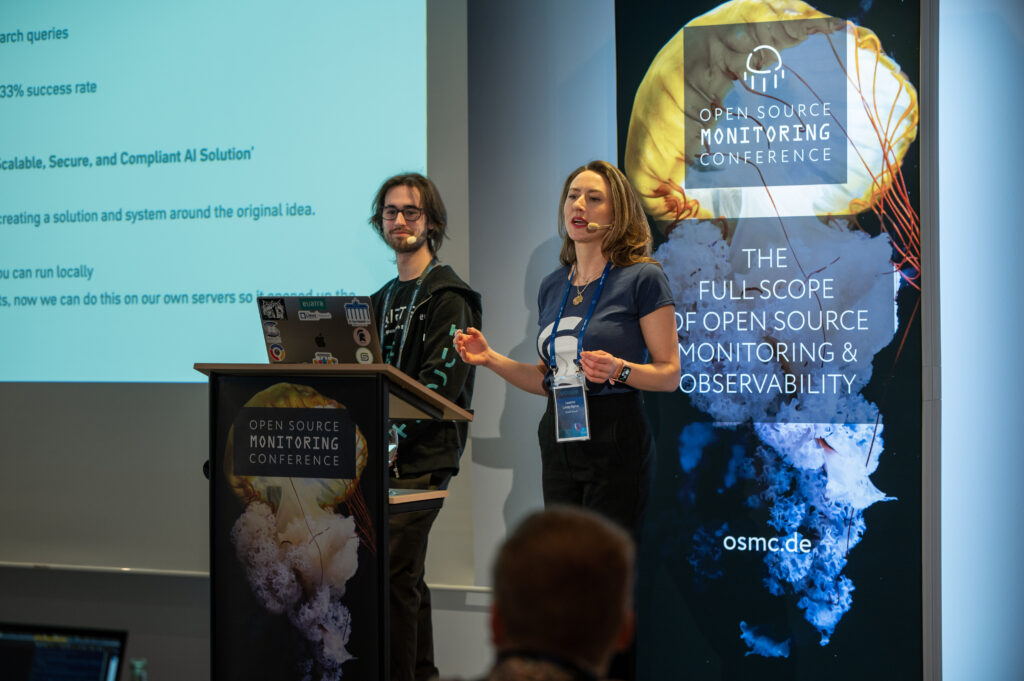
Last one before lunch was „SecureAI: A Scalable, Secure, and Compliant AI Solution“ by Lucas Jeanniot and Leanne Lacey-Byrne from Search Guard. As I know both now for a while I was sure they will deliver a great talk and as you probably know from other blog posts the topics AI and Security are two I am very interested in I was looking forward to the talk. Leanne gave a great introduction into the team and company behind the solution and SecureAI itself. She showcased the frontend and the options a novice, pro or admin user gets before handing over to Lucas for explaining the backend.
SecureAI is built on Apache Nifi, OpenSearch and HelixAI which he all explained in detail and you could look into your own if the ready to run solution SecureAI does not fit your needs.
In the demo he showed the data flow by uploading some files via the UI and then running some queries in one conversation starting from open invoices, needing to hire someone from open applications to solve the situation and drafting the mail for this. Perhaps not so impressive until you realize it is on premise working with your data with you having the full control over it!
The Afternoon
After enjoying the lunch and some networking the program started with the ignites again. If you do not know the format it is a short talk with slides on autoplay and it is great for adding some additional topics to the agenda.
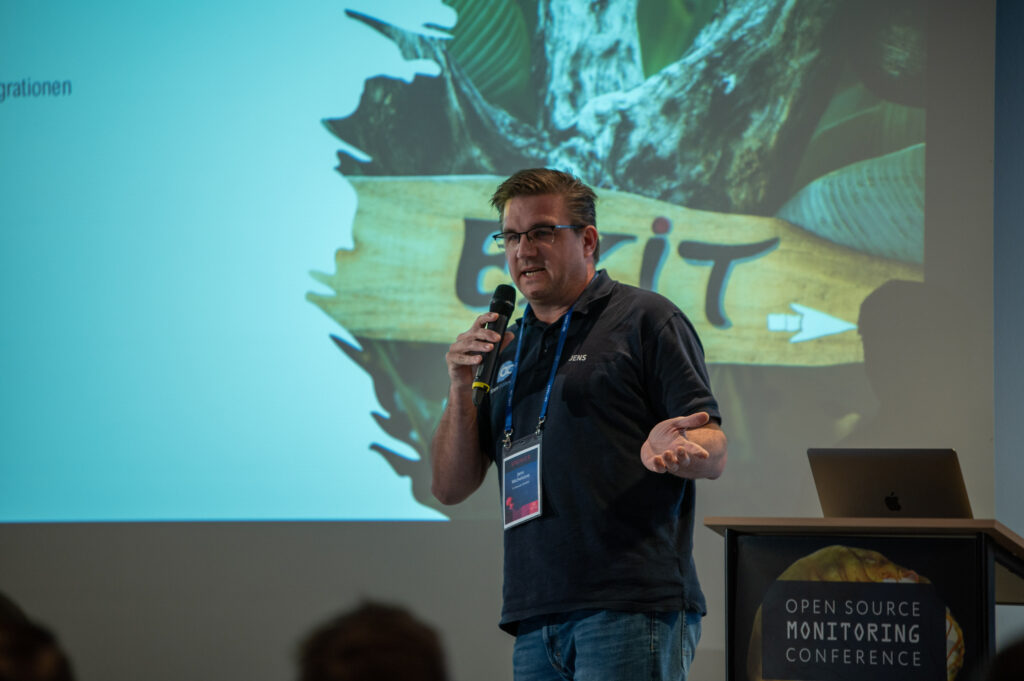
First one was „Monitoring meets Smart Home – Monitoring ist nicht nur eine Business Disziplin“ by Jens Michelsons who was brave enough to change on the fly from German to English so more attendees could follow him when talking about his balcony power station and how he does solve monitoring of it. He uses openITCOCKPIT and recommends some umbrella solution and graphing for solving the problem your own.
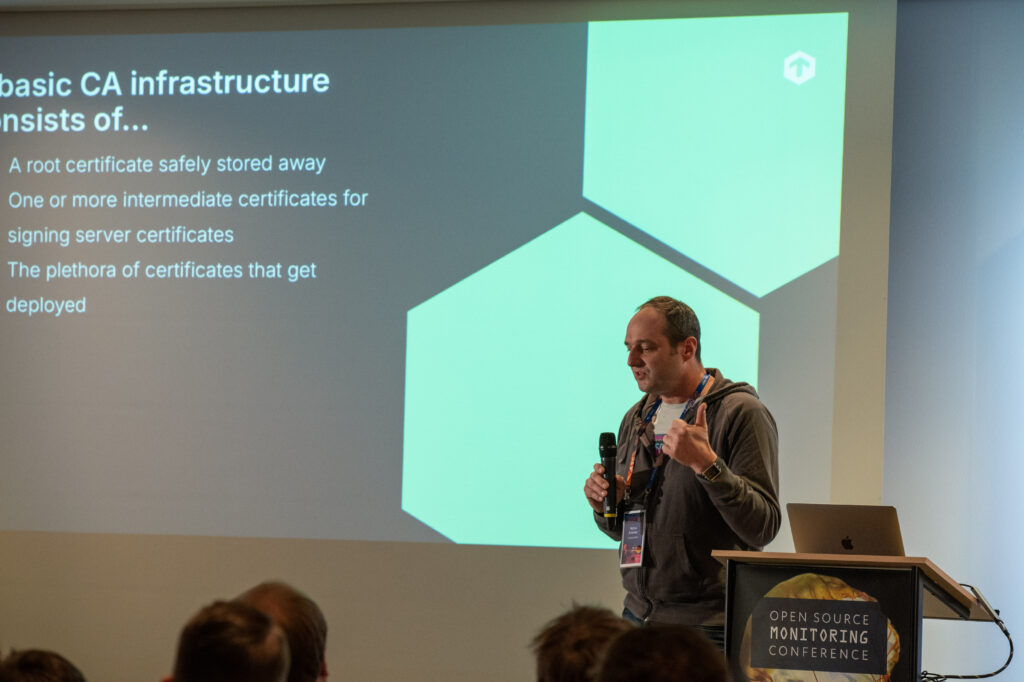
„Monitoring and maintaining self-signed certificates is dangerous“ by Mattias Schlenker did a quick, comprehensive introduction into using the OpenSSL commands to create and manage your own CA. If you need this, he also did put this up as a blogpost containing additional details.
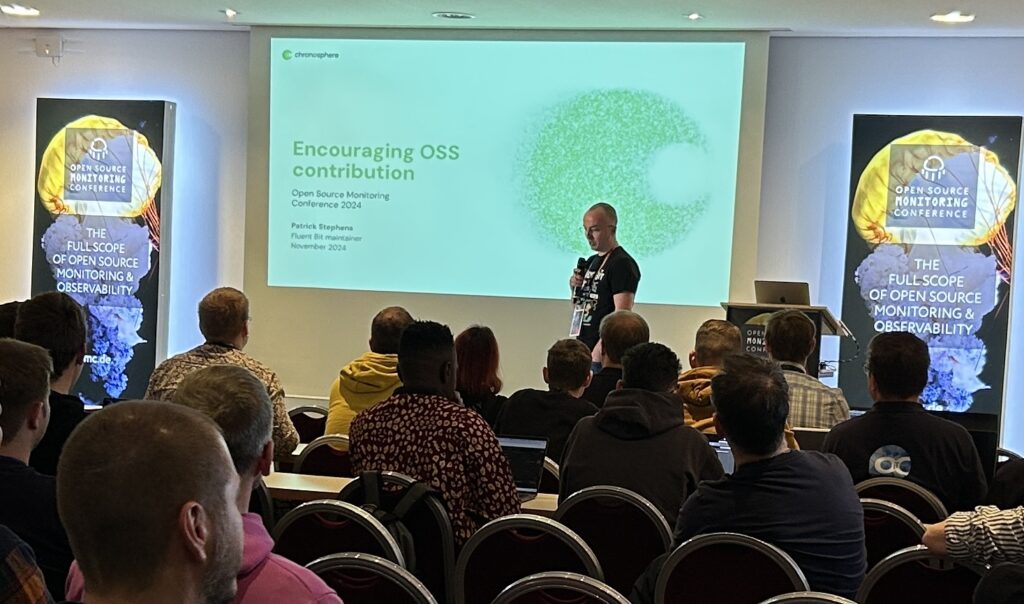
Patrick Stephens gave the third ignite „A day in the life of an OSS maintainer“ encouraging people to work on open source and doing it in a good way.
Next one was „Is Building an Observability Platform with Open Source the Right Choice?“ by Vanessa Martini.
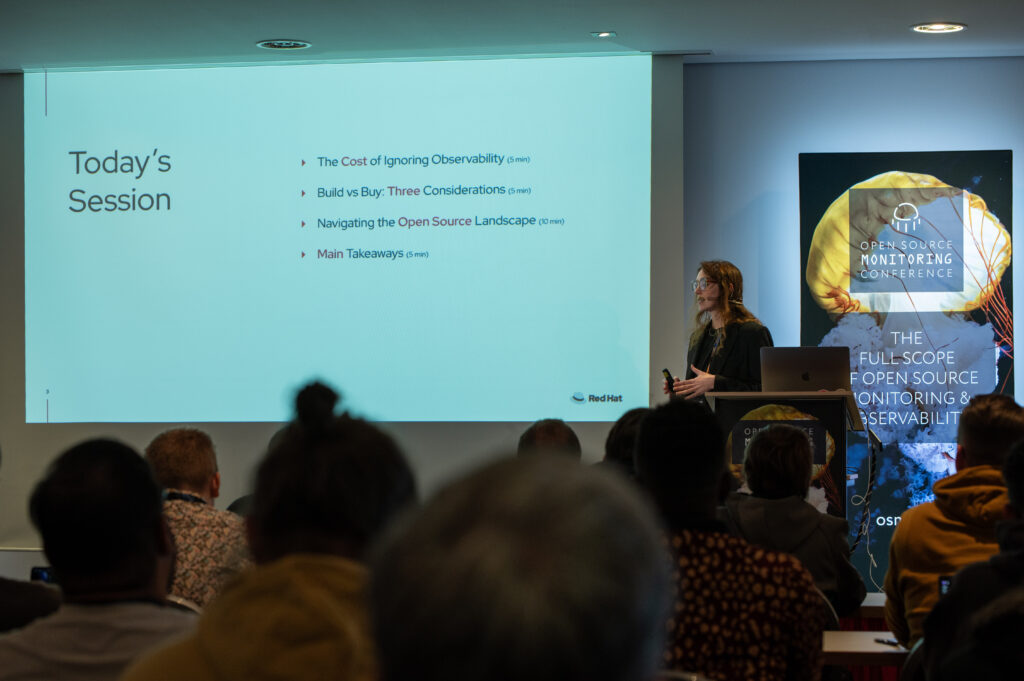
She started by explaining the cost of ignoring observability and showing the feedback loop powered by observability. When asking the audience the question of how an observability platform should look like she had interactively integrated the answers nicely, something I have not seen and liked very much. With these answers she started to give her top 3 considerations before navigating the open source landscape.
Looking into the main topics she gave tips and tool recommendations. For example Korrel8r was a recommendation for correlation of signals to avoid data silos. For getting the sizing right she recommended Prometheus Recording Rules. For dashboarding Perses was the recommendation. While these tools and features are quite young they are used already successful in OpenShift Observability.
As a conclusion she stated the importance of open source, not hiding there are also some traps. Answering her own question with a yes as long as you are willing to build your own solution based on the bricks of existing components.
I really liked the talk and will later follow up on it in a separate blog post going into more details.
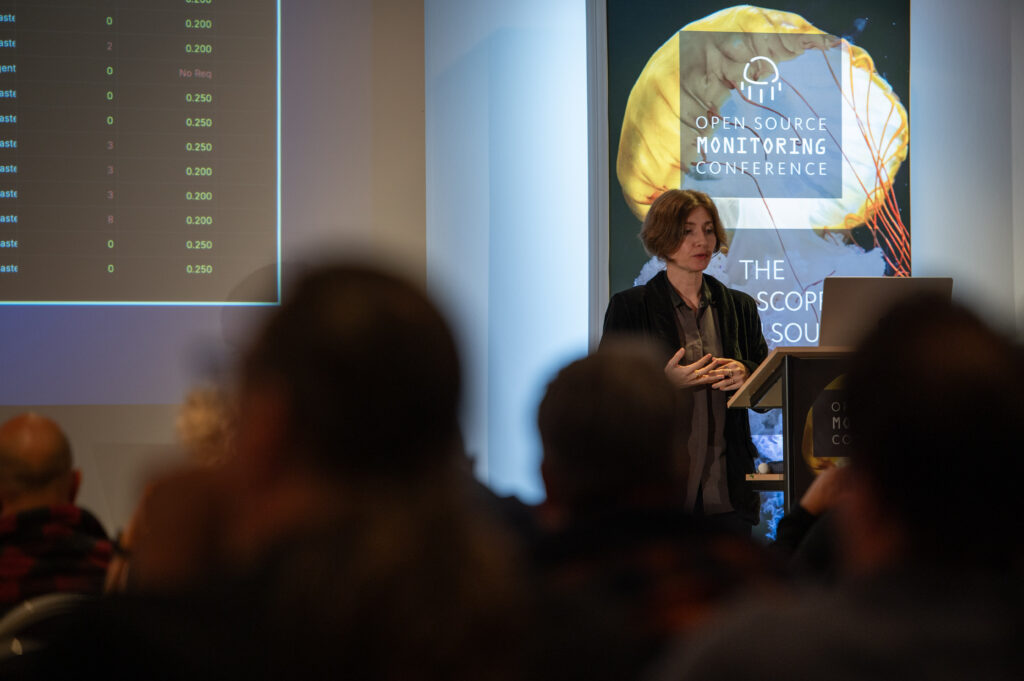
„Open source observability for private cloud: mission impossible or not?“ by Diana Todea asked the next question I was curious about the answer. Diana gave us some background about her team, company and the environment she is working on so we could understand the requirements much better. One challenge she is facing currently is the APM solution used going to be replaced with Jaeger and OpenTelemetry.
From the PoC they learnt much and developed a roadmap which starts by defining their open source strategy as they see many benefits and want to go this road. Also all the other takeaways are quite interesting, so I recommend putting this talk to your watch list after the conference archive is available.
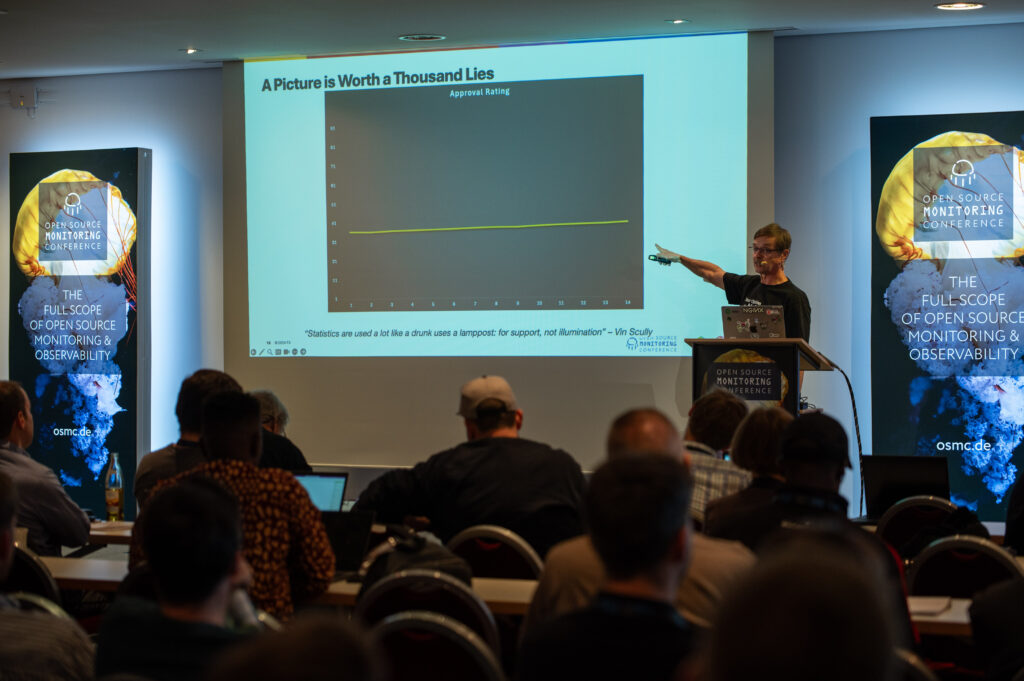
Dave McAllister told us about „The Subtle Art of Lying with Statistics“.
He nicely introduced the topic and showed the power of statistics in our data driven world.
With very practical and entertaining examples he made his points where statistics are misleading.
Another talk I can really recommend to watch from the archive if you work with data and statistics and want to lie with them or avoid it, or if you simply want to be entertained.
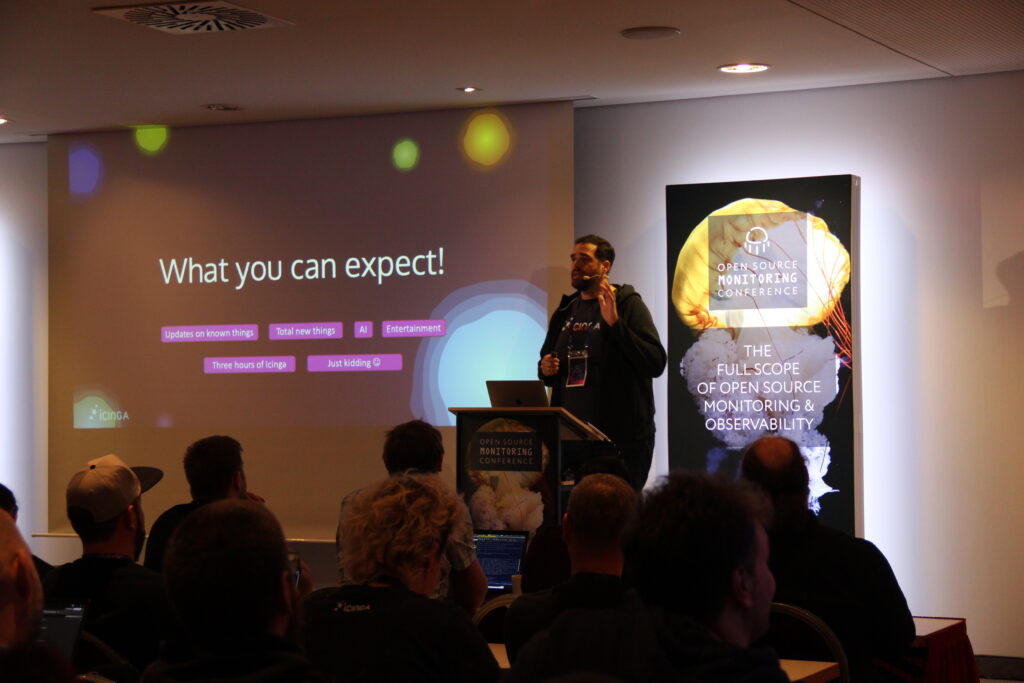
Last but definitely not least Bernd did the typically „Current State of Icinga“. He started as always with a short introduction (for the 15th time now) and then a quiz involving the audience trying to guess what some big example customers do. This nicely showed the variety of the customers and if you want to know more about this I recommend the customer success stories.
Then he talked about releases including a critical security release you should be aware of. Most releases are small but show that the project is well maintained. One nice new addition is the upcoming visualisation of dependencies including redundancy groups.
Also Icinga notifications had many improvements and starts to really look good and production-ready. The same goes for Icinga for Kubernetes.
After the technical things Bernd talked shortly about the events like the summit happening earlier this year and the upcoming meetups. Also he talked about the new Icinga certification and a survey which will influence the upcoming development.
As always the talk was not only informative but also quite entertaining!
The Evening Event
After the day of talks the crowd is heading to the Korn’s again where we had the event already the last years. So I am pretty sure we will have a great event with good food and even better networking. To keep people entertained I heard we will have some Arcade machines, but I think Christoph who will take over here in the blog tomorrow will review also the evening event.

0 Kommentare